Our Process
Introducing RocketRoast
Technology
Yesterday’s Grounds Help Roast Tomorrow’s Beans
RocketRoast Technology is Climate Coffee’s proprietary
closed-loop roasting process. Instead of relying on natural gas, propane, or grid electricity, our system transforms recovered spent coffee grounds and coffee chaff into the energy needed to roast the next batch of coffee.
The process produces more than exceptional coffee. It keeps valuable organic material out of landfills, eliminates fossil-fuel heat from the roasting environment, creates agricultural biochar, and helps transform coffee roasting from a linear process into a regenerative cycle.
Coffee that comes full circle.

Watch Our Process
Watch our videos to learn more about our technology and get an insight into our equipment and process.
Independently Tested.
Carbon-Rich by Design.


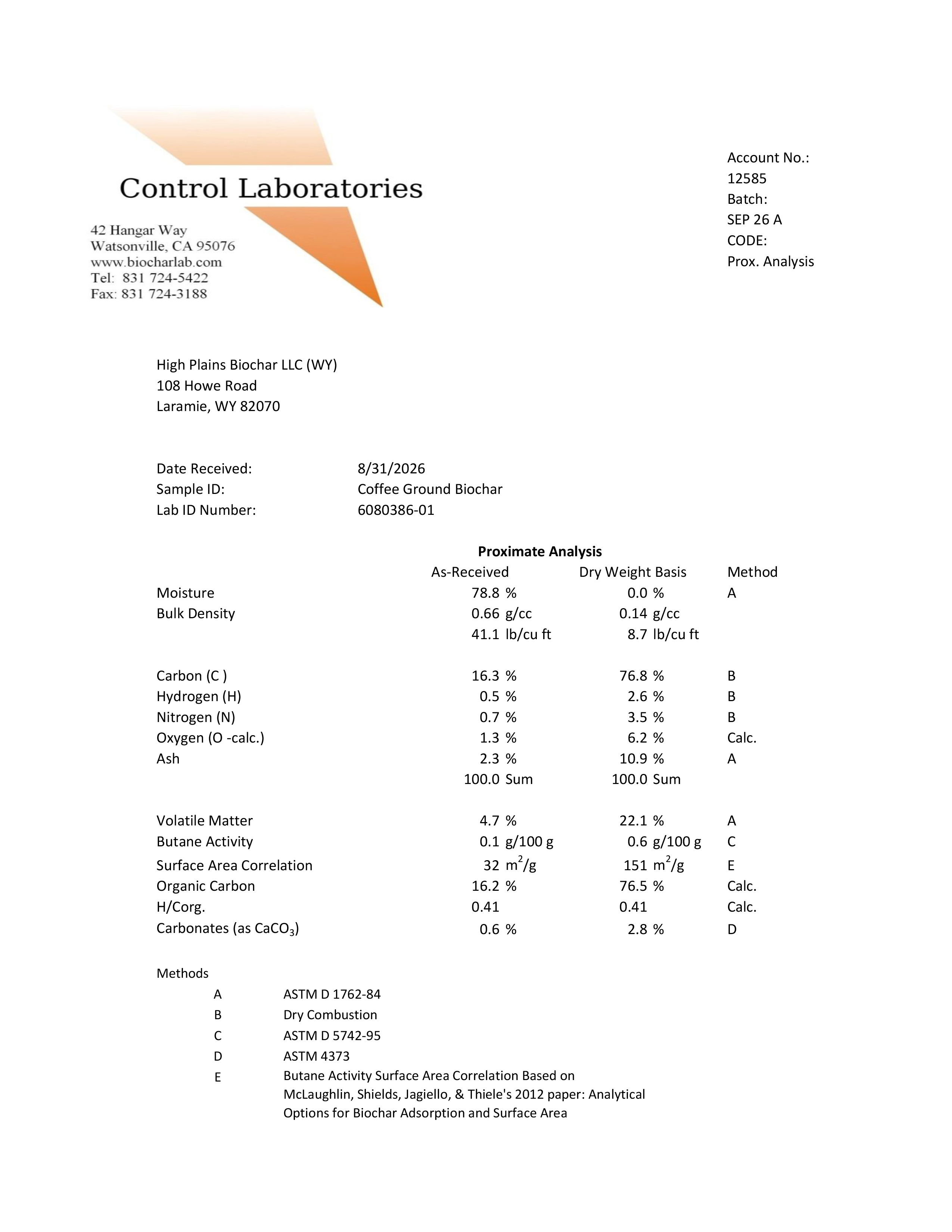
Our coffee-ground biochar isn’t just a byproduct—it’s a measurable form of captured carbon. An independent proximate analysis performed by Control Laboratories found that our finished biochar contains 76.8% carbon by dry weight, including 76.5% organic carbon.
An H/Corg ratio of 0.41 indicates that the coffee grounds underwent substantial carbonization, transforming a short-lived organic waste stream into a more stable, carbon-rich material. Instead of decomposing in a landfill, these spent grounds become biochar with potential value for soil improvement, water retention, and long-term carbon storage.
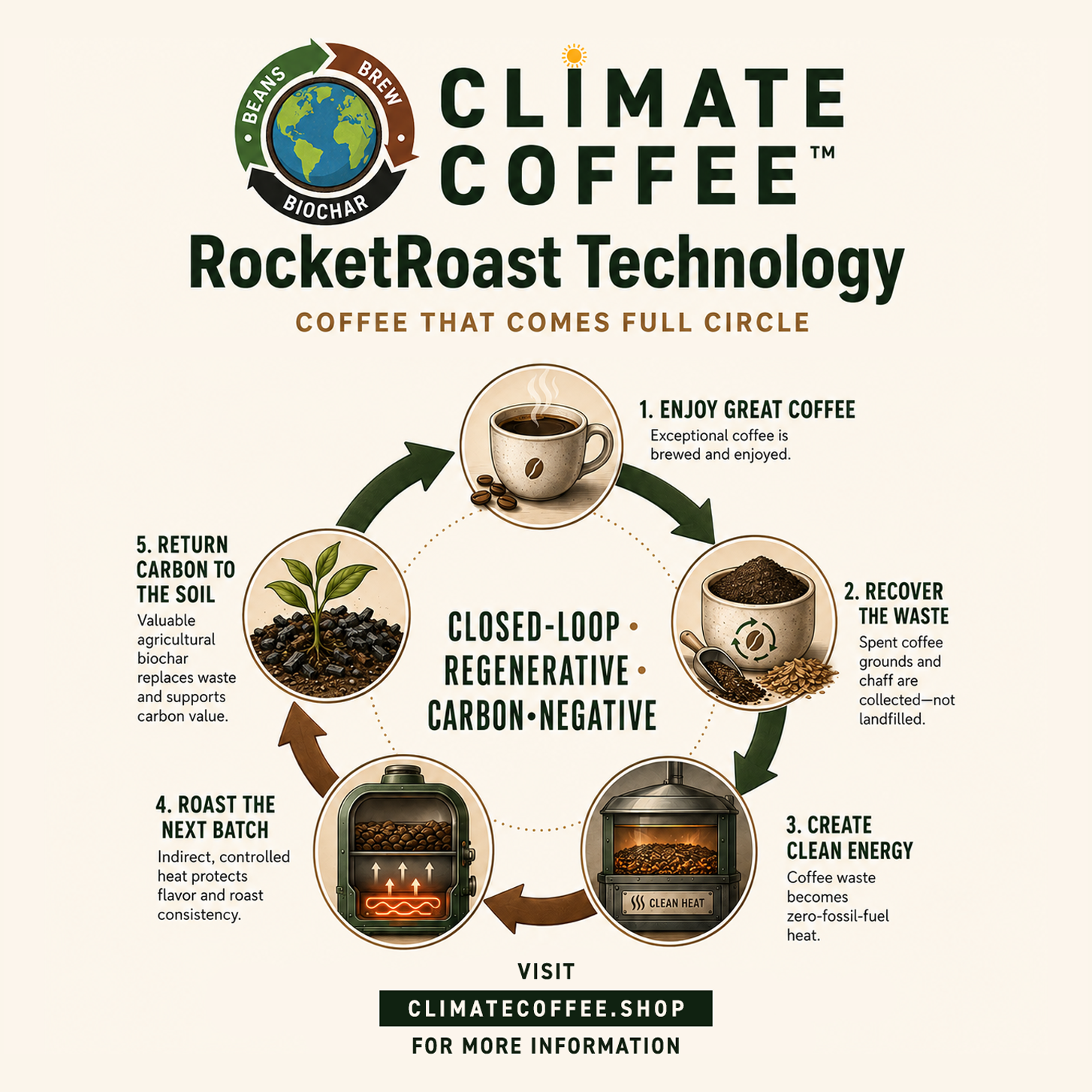
The RocketRoast Technology Cycle
From the coffee in your cup to the energy used to roast tomorrow’s beans, every stage is designed to keep resources in circulation and carbon out of the atmosphere.
The cycle begins with an exceptionally clean, carefully roasted cup of coffee. Our controlled roasting method allows the natural sweetness, complexity, and origin characteristics of every bean to remain at the center of the experience.
After coffee is brewed, the spent grounds are collected instead of being discarded. Coffee chaff created during roasting can also be recovered and returned to the process.
By keeping these materials out of landfills, we prevent a valuable energy resource from becoming waste and reduce the potential for decomposing coffee grounds to produce landfill methane.
Recovered coffee grounds and chaff become the renewable fuel that powers RocketRoast Technology.
This locally available resource replaces conventional fossil-fuel and grid-powered heat, allowing yesterday’s coffee waste to provide the energy needed for tomorrow’s roast.
The energy generated from recovered coffee material is transferred indirectly to the roasting chamber.
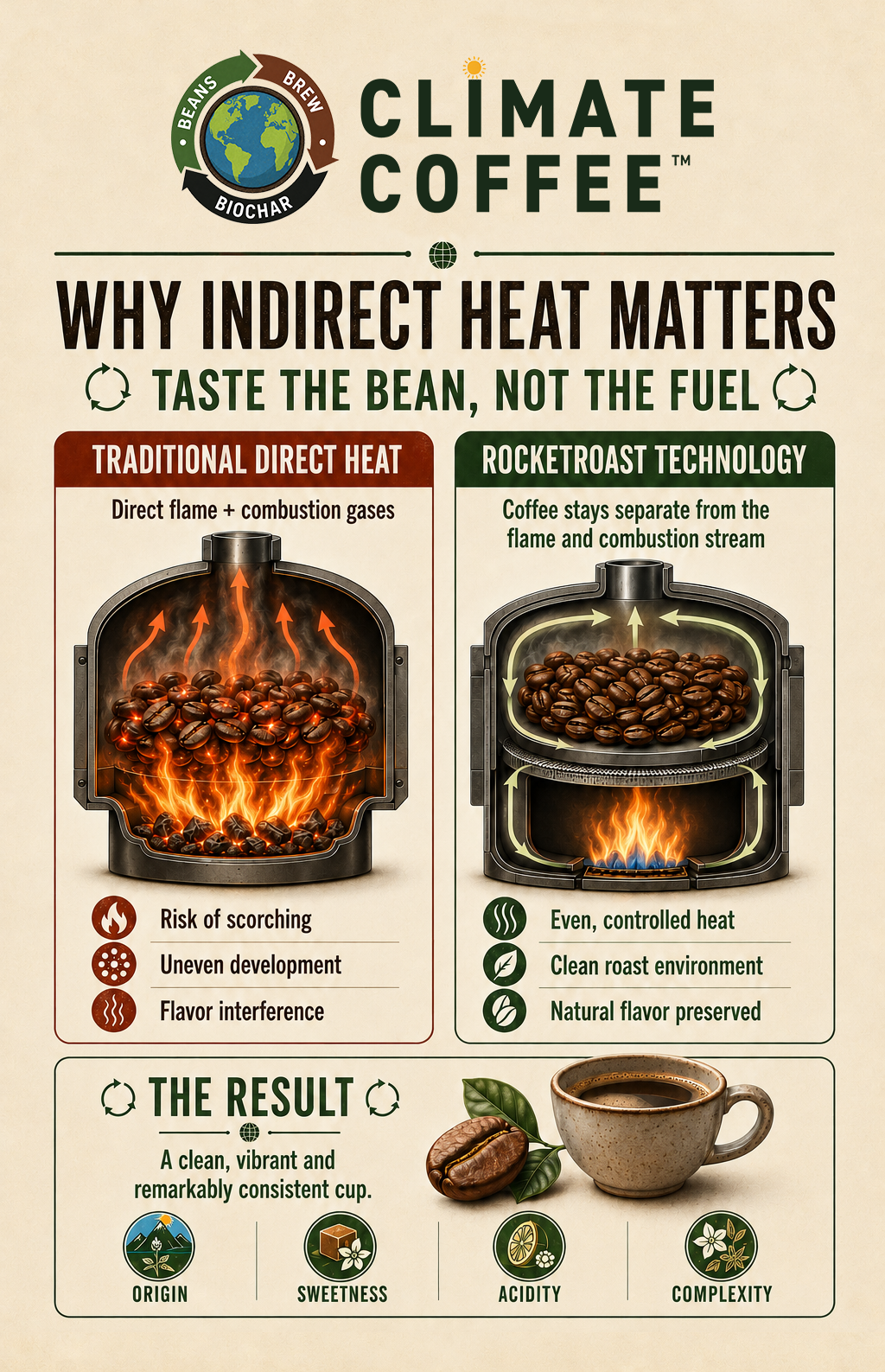
Unlike direct-fired systems, the coffee beans remain separated from the open flame and combustion stream. This controlled, even heat helps reduce scorching and burning while improving roast consistency and protecting the bean’s natural flavor.
The process leaves behind carbon-rich biochar rather than conventional waste.
This biochar can be used in agricultural applications to support soil structure, water retention, nutrient efficiency, and long-term carbon storage. It can also create opportunities for measurable carbon value and carbon-credit generation.
The biochar returns value to the soil—and the cycle begins again.
From a Linear Industry to a
Regenerative One
Traditional coffee production follows a largely linear path: coffee is grown, roasted, brewed and discarded. Valuable carbon is lost, waste is sent to landfills, and more energy must be brought in to roast the next batch.
RocketRoast Technology changes that equation.
Coffee waste becomes energy. Energy roasts coffee. Roasting creates biochar. Biochar returns value to agriculture. Every cycle helps reduce waste, eliminate fossil-fuel dependency and build a cleaner future for coffee.
Closed-loop. Regenerative. Carbon-negative.

Recover the Waste
After coffee is brewed, the spent grounds are collected instead of being discarded. Coffee chaff created during roasting can also be recovered and returned to the process.
By keeping these materials out of landfills, we prevent a valuable energy resource from becoming waste and reduce the potential for decomposing coffee grounds to produce landfill methane.

Create Clean Energy
Recovered coffee grounds and chaff become the renewable fuel that powers RocketRoast Technology.
This locally available resource replaces conventional fossil-fuel and grid-powered heat, allowing yesterday’s coffee waste to provide the energy needed for tomorrow’s roast.

Roast the Next Batch
The energy generated from recovered coffee material is transferred indirectly to the roasting chamber.
Unlike direct-fired systems, the coffee beans remain separated from the open flame and combustion stream. This controlled, even heat helps reduce scorching and burning while improving roast consistency and protecting the bean’s natural flavor.

Create Valuable Biochar
The process leaves behind carbon-rich biochar rather than conventional waste.
This biochar can be used in agricultural applications to support soil structure, water retention, nutrient efficiency, and long-term carbon storage. It can also create opportunities for measurable carbon value and carbon-credit generation.
The biochar returns value to the soil—and the cycle begins again.